


In my last post I mentioned that the C2 Norns produced seven new hatchlings, so I'd split the genetic analysis off to a separate post. And here it is!

He has a minor brain lobe mutation that I expect won't affect him at all; his decision lobe rest state is 81 instead of 80. He also has a stimulus mutation that makes falling through the air a little scarier for him, but given that he'll live underwater, that shouldn't be a problem!


I loaded back into the world with the babies still exported, and decided to keep it that way. I think for Creatures 2 I'm going to separate the generations; things are chaotic enough as it is.


At this point, I excitedly dove into genetic analysis of a replacement, only to realize just how much baseline knowledge and understanding of Norn biology I had really built up as I floundered to figure out where to even begin explaining to the folks on Discord what we were looking at.
[Originally written July 8 2021]

Then things got weird, fast. For some reason, the pufferfish decided to eject Olaf, and only Olaf, from the ocean. I have no idea why. Then, once he was on land, I tried to get him back in the water where he belongs, only to have him completely freeze on me. I tried fiddling around with the springy toy (again, it’s a godsend for moving stuck Norns) but to no avail. Olaf actually aged up on land, so it’s a very good thing that he’s an Atlantic Mernorn and not a standard variety, or he would have suffocated. When injections failed to un-stick him, I exported and reimported him, which did the trick, but then I had to juggle him with all the other Norns and try to get him and only him into the ocean, which was an ordeal. It also involved Magni helpfully trying to demonstrate swimming, so that was fun. Then Sven went and collapsed, presumably due to not eating, so I had to get him back on his feet with an injection, but he seemed to stabilize after that.


Freyja ended up in the splicing room, which is not a good long-term location for a Norn, so I guided her out into the treehouses. Eventually I got everybody into at least decent positions, except Magni, who continually re-activated the teleporter to go back to the incubator! He really didn’t want to leave! Eventually I got the cheeky little fellow out, and then it was time to set about hatching the remaining eggs.
And that, of course, means it’s time for genetic analysis! We’ll start with Grelod. She has a lobe mutation that is thankfully just a random value in a state rule, sandwiched safely among a bunch of <END> flags. The receptor that makes Norns walk differently when sleepy kicks in early for her – normally, being a walk animation, it doesn’t kick in until childhood, as babies are supposed to still be crawling, regardless of mood. Her third mutation is unfortunate but not crippling.
3 Coldness Decrease + 3 Coldness = 1 Reward.
Rate: 8 (max to 0 in about 0.4 secs)
3 Coldness Decrease + 3 Coldness = 1 Punishment.
Rate: 8 (max to 0 in about 0.4 secs)
Normally this reaction encourages Norns to do things that warm them up when cold, but in Grelod it will discourage this behavior.

Her first mutation is the receptor that ties the sleepiness chemical to the sleepiness drive; normally it’s active from birth, but it doesn’t kick in for Thordis until childhood. Her second mutation is in the emitter for sibling pheromones; the threshhold has changed by 1, which I expect will have no effect. The third mutation changed a 1 to a 0 in the inputs of a reaction; a 0 isn’t a valid value so it gets autocorrected by the kit, and the chemical being counted was <NONE> so this wouldn’t do anything anyway.

What she does have is far more interesting mutations, aside from her two lobe mutations, which are just random values among the <END> values in state rules, as per usual.
Organ: “Creature”, Tissue: “Reproductive”, Locus: “Become fertile if high”. Chemical: “Oestrogen”.
Analogue: Output = 0 + ((Signal - 73) * 255).
Organ: “Creature”, Tissue: “Reproductive”, Locus: “Become fertile if high”. Chemical: “Oestrogen”.
Analogue: Output = 0 - ((Signal - 73) * 255).
At first, I was a bit excited about this one. I figured since the signal was inverted, the output would always be 0, and thus essentially she would never be fertile, and therefore never produce arousal potential (and in turn, no sex drive). As an asexual person myself, it would have been cool to find essentially an asexual Norn. However, if the math is not clamped until the end, then a signal of less than 73 would result in subtracting a negative number; essentially Halla would become fertile only when she had low oestrogen. We’ll find out as she grows up!
Her next mutation is one I can’t even make sense of, and I suppose must be an error. The gene actually looks the same in the genetics kit, but the D-DNA analyzer flagged it as a mutation, and when compared to a standard Norn, there’s a chunk of the line missing.
465 Different in File 1 122 0 Emb B MutDupCut 128 Organ#=6 chem=Antigen2, thresh=16, nom=0, gain=50, features=Digital
465 Different in File 2 122 0 Emb B MutDupCut 128 Organ#=6 Organ, Injury chem=Antigen2, thresh=16, nom=0, gain=50, features=Digital
My best guess is that the entire Receptor Attachment section just got omitted. No idea if an invalid change like that would actually do anything in-game, or what it would do if it did.
Organ: “Creature”, Tissue: “Sensorimotor”, Locus: “Crowdedness”. Chemical: “Crowded”. Sample every 40 ticks.
Analogue: Output = (Signal - 2) * 8.
Organ: “Creature”, Tissue: “Sensorimotor”, Locus: “Light Level”. Chemical: “Crowded”. Sample every 40 ticks.
Analogue: Output = (Signal - 2) * 8.
This is certainly a strange mutation! Halla will prefer dark places, feeling crowded in bright light. That said, this probably also means that how crowded she feels will be unconnected to the number of Norns around her.
1 Collapsase + 1 Anger = 1 Fear.
Rate: 32 (Max to 0 in about 5 secs)
1 Upatrophin + 1 Anger = 1 Fear.
Rate: 32 (Max to 0 in about 5 secs)
Now this one’s interesting! Collapsase is a chemical that is produced when a creature is retreating from a potential threat, and its presence spurs the fight-or-flight response toward flight by converting anger into fear. In other words, if a creature starts running, its anger turns to fear and it will probably continue running. The equivalent in the other direction is turnase, produced when a potential threat approaches, which converts fear to anger – a Norn standing its ground will probably continue doing so.
Upatrophin and downatrophin are simply chemicals emitted in response to the steepness of the terrain, usually used to trigger receptors that cause the gaits for walking up and down hills. In Halla’s case, she essentially doesn’t have a normal flight response, as collapsase won’t trigger her anger to convert into fear (which would encourage more running, producing more collapsase). However, she is unwilling to fight an uphill battle, literally! If her opponent has the high ground, she’ll become afraid; note that this is a reaction converting anger into fear, so if she’s not angry to begin with, upatrophin won’t make her afraid.

That said, looking at the normal behavior of the receptor made me question my understanding of receptors as a whole, including going back and re-evaluating Halla’s fertility mutation.
Organ: “Current Organ (Gonad)”, Tissue: “<no tissue>”, Locus: “Repair Rate”. Chemical: “Stress”.
Analogue: Output = 0 - ((Signal - 0) * 12).
Organ: “Current Organ (Gonad)”, Tissue: “<no tissue>”, Locus: “Repair Rate”. Chemical: “Stress”.
Analogue: Output = 0 - ((Signal - 1) * 12).
The mutation itself seems inconsequential; if you’ve got more than 0 stress, you probably have more than 1 stress. But shouldn’t the normal behavior of this gene always produce an output of 0? No matter what the signal is, it’s always positive and therefore, when subtracted from 0, should always be clamped to 0.
This leads me to two possibilities: first is that the repair rate accepts negative values and therefore doesn’t clamp. The other is that my formula for receptors with the “output REDUCES with increased stimulation” flag is wrong. I have been operating on the assumption that the formulas here are the correct ones. But for emitters, the genetics kit lists inversion as meaning that the signal is treated as (255 – signal), so it’s entirely possible that’s the case for receptors as well.
I tried engineering a test Norn with receptors and emitters tied to arnica (since I could dose the Norn with that at will via arnica berries) and to unused chemicals (that would otherwise not show up but could be graphed) so I could watch the interaction, but to no avail. I have no answers at this point in time.
[Originally written July 5 2021]
And not a moment too soon. As I placed the new vendors, there was a flurry of noise and activity among the creatures. I hatched a replacement Hawthorn (wasn’t gonna waste a perfectly good name) I injected with the genetics kit, as my egg layer seems to still be spitting out both kinds of Grendel. Oh well.
In the chaos, sadly, several Norns were lost. Ash and Lilac succumbed to old age, while Birch, Peony, and Sunflower were killed in the midst of attempting to transition into a potion-based anger management model.


After that, I sat around in the Meso, keeping an eye on Dogwood and Sycamore. It was too… well, it’s never quiet with Norns around, but it was too calm. I was waiting for the other shoe to drop. A flurry of eggs, outbursts of violence, a sickness… but nothing happened.


Having corrected the script and Hazel’s genome, I took another look. He has a couple invisible pigment bleed changes, and a minor inconsequential change in his half-lives (a 255 changed to 254), which I didn’t even bother to figure out what chemical it was. Slightly more notable is this change to a receptor.
Organ: “Creature”, Tissue: “Drive levels”, Locus: “TIREDNESS”. Chemical: “Tiredness”.
Analogue: Output = 0 + ((Signal - 0) * 0.851).
Organ: “Creature”, Tissue: “Drive levels”, Locus: “TIREDNESS”. Chemical: “Tiredness”.
Analogue: Output = 0 - ((Signal - 0) * 0.851).
Normally, as the tiredness chemical value goes up, the creature’s tiredness drive in the brain will go up accordingly. In Hazel this has mutated to be inverted, so the drive goes down as the chemical goes up. However, since the nominal value here is already 0, and the value can’t be negative, this effectively means his tiredness drive will always be 0, no matter how much tiredness chemical he has in his system. Thankfully, his sleepiness drive is fine, so he’ll rest because of that (hopefully).

This left two instinct mutations, but I couldn’t write them off as being the remaining autocorrected errors; Amaranth’s file had 2 autocorrected errors too. Indeed, both of the indicated instincts were mutated, which means that Amaranth’s error mutations have passed to Carnation. I’m still not sure if they actually affect anything though. Anyway, the instinct to eat fatty foods when hungry for fat mutated to be variant 1. Carnation is variant 5, so this instinct is dormant in her. The other mutation was an exercise in irony.
When… “Tissue 2: noun” “IT is <ID 36>(Norn)” …and you “Approach it”: -1 LONELINESS.
When… “Tissue 2: noun” “IT is <ID 36>(Norn)” …and you “Approach it”: -1 CROWDEDNESS.
Essentially, Carnation won’t instinctually want to go to other Norns when she’s lonely, but she will instinctively flock to them when she’s crowded. She’s a masochistic introvert who stays by herself even when she wants company, and is perpetually uncomfortable in crowds but can’t bring herself to leave. I can relate!
[Originally written July 3 2021]
Holy smokes, I’d forgotten how chaotic Creatures 3 is. I spent less than half an hour playing and a lot happened in that time.
I’ve been batting around the idea of making a Calm Balm vendor to help out with angry creatures, but once I downloaded the tools for C3 agent making and started ripping apart the scripts for the medicine dispenser and mini empathic vendor, I realized I might be in just a bit over my head. That’s not going to stop me of course, as I’m going to dive into a way-too-complex project in true Shee fashion, just as I did with genetics. But I did decide maybe I’ll do it another day.


I told you a lot happened in a short span of time. With three new hatchlings with genomes to analyze, I decided that was quite enough and closed the game.


The other noteworthy mutation is a changed instinct, but Maple inherited his father’s “do not express” flag on this gene, so it won’t affect him.
When… “Tissue 2: noun” “It is <ID 34>(portal)” …and you “Activate 1 it(push)”: -0.306 Pain.
When… “Tissue 1: verb” “verb: Default (quiescent)” …and you “Activate 1 it(push)”: -0.306 Pain.
This, of course, is utter nonsense. The verb lobe handles creatures hearing verbs being spoken, and I don’t think the default/quiescent verb can ever actually do anything in this lobe. If, somehow, a Norn with this mutation dreams that someone tells him to do the default verb, and he pushes something, his dream tells him this will reduce pain. I don’t expect that bizarre nonsense instinct will have any real effect, so this is more noteworthy as the lack of the “go through a portal when hurt” instinct. But even that means nothing for Maple, since he and his father both have this gene flagged as “do not express” anyway.

[Originally written July 2 2021]
I’ve been putting off going back to Creatures 2 for multiple reasons. First, there was the fact that poor Gandalf’s deadly mutation was waiting for me. Second, I had moved furniture and the KVM/NUC setup dedicated to running Creatures 2 needed to be reconnected. And third, it turns out I was suffering from depression.
But I'm on sabbatical and getting treatment, and doing much better now, so I was ready to expend energy on things like re-wiring the computer system. I even figured out how to get the monitor to scale appropriately; I have a 1080p monitor but of course Creatures 2 doesn’t like to work well above about 720p, and I had previously set it up to stretch the 720p desktop to fit the monitor, resulting in odd sizing and blurriness. Now, after some tweaks in the Intel Graphics Control Panel, it just renders at real size with letterboxing, making it much easier for me to gauge the size of Norns and making everything much crisper.


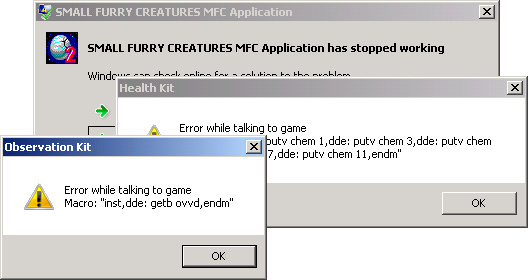
The Mernorns produced another son, but I’m not bothering to analyze the genetics, because of what was soon to come. Borland’s sudden appearance turned out to be a bad omen, because not long after, the game crashed. I tried to relaunch, and got an error. I rebooted, tried to relaunch, and got an error. I opened a test world, no error. Tried to open the main world, error. The world file was corrupted. I had no choice but to start over.

Then, at long last, it was time to introduce true Creatures 2 Norns to the land. I hatched five of them, which may seem like a bit much, but I wanted these breeds represented in the population. Magni, the Lop Ear Norn, would be the first of his breed to see actual, normal gameplay! Freyja and Bjorn brought Golden Desert and Hebe genes to the table, while Gunhild the Emerald and Sigurd the Frog Norn brought vibrant greens to the world.


Sven has several mutations of note. He’s got two brain mutations to start with, both displaying the same change. I’ll show the one in 555; the other is in 570, the Regulator Lobe.
D1 Growth
Source Lobe: Noun i/ps. Min: 1, Max: 1. Spread: flat. Migrate: never.
Initial config: Fanout: 0, LTW between 255 and 255, Strength between 255 and 255.
Source Lobe: Noun i/ps. Min: 1, Max: 1. Spread: normal. Migrate: never.
Initial config: Fanout: 0, LTW between 255 and 255, Strength between 255 and 255.
I don’t expect them to have any effect; since the min and max dendrites are 1 for this gene and 0 for the other, so in both cases the spread shouldn’t actually matter.
Organ: “Brain”, Tissue: “Decision o/ps”, Locus: “Chemical 1”. Chemical: “Punishment”.
Analogue: Output = 0 + ((Signal - 0) * 255).
Organ: “Brain”, Tissue: “Decision o/ps”, Locus: “Chemical 1”. Chemical: “Punishment”.
Analogue: Output = 1 + ((Signal - 0) * 255).
This one may or may not be a problem. Basically, Sven always has a very small punishment signal in his brain, which could cause trouble with learning. On the other hand, because it’s such a small signal, it may not have a noticeable effect.
Organ: “Creature”, Tissue: “Somatic”, Locus: “die of old age”. Chemical: “Life”.
Digital: Output = 117 - 255 if Signal > 5.
Organ: “Creature”, Tissue: “Somatic”, Locus: “die of old age”. Chemical: “Life”.
Digital: Output = 117 - 255 if Signal > 4.
This equation produces 0 if the creature has more than 5 units of Life. Presumably, a non-zero value triggers death. The Life chemical decays over time, which triggers aging and eventually death. Barring catastrophe, Sven will live a bit longer than a normal Mernorn because his Life needs to decay more to trigger death.
1 Boredom Decrease + 1 Boredom = 1 Reward + 1 <nothing>.
Rate: 8 (Max to 0 in about 0.4 secs)
1 Boredom Decrease + 1 Boredom = 1 Reward + 1 Pain.
Rate: 8 (Max to 0 in about 0.4 secs)
Sadly, it seems reducing boredom will cause Sven a small amount of pain. Hopefully, this trace amount will have no effect on his quality of life, and thankfully it creates Pain directly rather than Pain Increase, which would involve punishment.
1 Glycogen + 1 Adrenaline = 3 Glucose + 1 Adrenaline.
Rate: 32 (Max to 0 in about 5 secs)
1 Glycogen + 1 Adrenaline = 3 Glucose + 0 Adrenaline.
Rate: 32 (Max to 0 in about 5 secs)
Not sure what to make of this one. In theory, this would mean that adrenaline-fueled conversion of glycogen to glucose would also consume the adrenaline, making the reaction much shorter. However, it is the type of mutation that gets automatically corrected in the genetics kit, so I’m not sure it actually affects him.
Sven also has a mutation in the half-life of chemical 168, which shouldn’t affect anything. He has a few minor pigment and pigment bleed changes that shouldn’t be visible. The most notable of these changes is that one of his red values is at 137 instead of 128, but even this hasn’t produced a noticeable change. As for the mix-and-match color genes of the Mernorns, he has inherited both of his father’s pigment bleeds, so he’ll be the spitting image of his dad.
[Originally written November 24 2020]

The two Grendels, Daisy, Ash, Spruce, and Acacia were clustered in the Woodland, yelling at the top of their lungs, so after checking in on them, I fled to the relative tranquility of the Meso, where the creatures were a bit more spread out. Rose continued to chill up by the lemon pod. That seems to be her home, and I don’t expect her to move any time soon. Both of the youngest Norns seem to have found adult mentors, as Foxglove stuck close to Birch on the lowest level, and Amaranth played with Pine on the middle level.

Organ: “Current Organ(043 MITOCHONDRIAL FUNCTION)”, Tissue: “<no tissue>”, Locus: “Injury”. Chemical: “Antigen 5”.
Analogue: Output = 0 + ((Signal - 0) * 0.255).
Organ: “Current Organ(043 MITOCHONDRIAL FUNCTION)”, Tissue: “<no tissue>”, Locus: “Reaction Rate”. Chemical: “Antigen 5”.
Analogue: Output = 0 + ((Signal - 0) * 0.255).
Normally, Antigen 5 causes injury to this organ, but for Sequoia it’ll instead alter his reaction rate in some way. The fact that this receptor outputs 0 when there’s no Antigen 5 in his system doesn’t seem to be having any harmful effect – if it caused the reaction rate to come to a stop, I’d expect him to be dead, as this organ hosts the reactions involving the production of ATP.
1 Antigen 6 + 3 Glucose = 3 Antibody 6 + 1 Hotness.
Rate: 48 (Half-life: 5.8 seconds)
1 Antigen 6 + 3 Glucose = 3 Antibody 7 + 1 Hotness.
Rate: 48 (Half-life: 5.8 seconds)
Sequoia produces the wrong antibody in response to antigen 6. This doesn’t worry me too much based on my previous research, which seems to indicate that the antibodies don’t actually do anything chemically in Creatures 3. If they do anything at all, it’s fighting the bacteria itself rather than the disease, and frankly that’s not a problem when my response to any and all bacteria is the pink fog.
Stimulus: “<spare action>”, Signficance: “0”. Reaction: “Default (quiescent)”, Intensity: “0”.
-1 Pain, -1 Boredom, -1 Crowded.
Stimulus: “<spare action>”, Signficance: “0”. Reaction: “Default (quiescent)”, Intensity: “0”.
-0.992 Pain, -1 Boredom, -1 Crowded.
The Genetics Kit lists this stimulus only as “spare action” but based on the title of the gene it’s the stimulus of passing through a teleporter or warp portal (I’m not sure whether they have the same stimulus or not). Sequoia gets slightly less pain reduction from teleporting… though I’m not sure why teleporting relieves pain at all.
Edit: I later figured out that this is to encourage creatures to flee through portals when they're being attacked.

At first I kept them in the Learning Room, with a cookie machine to provide a gadget to smack around and not a lot else, so that we could focus on learning how to handle anger. Once I was satisfied with their behavior I moved both of them to the Meso and kept a very close eye on them, though I did occasionally check in on the others; Spruce and Ash were telling Willow about how much they loved Daisy, while Willow politely disagreed, and Daisy herself was hiding behind the framework by the door to the Jungle, presumably trying to get away from her obsessive fanclub. Pine was hanging out by himself, and Acacia had gone off on an adventure to the Jungle. After a while, I moved Sycamore and Oak to the Terrarium, as Foxglove had just laid an egg and I already had Daisy’s in my inventory, so I figured I could proceed with normal creature management.

[Originally written November 23 2020]

I had previously been dismissing any mutation that just changed a variant number, on the assumption that the variant system wasn’t actually implemented fully in C3/DS, and that the value was completely meaningless. But it started gnawing at me, so I decided to test it by engineering a genome where colors are linked to variants, then hatching several eggs of that genome. The result was a rainbow of Norns, proving that while the default genome doesn’t use variants, the script is still in the game. Further, it turns out that the CFF genome does use variants (to determine whether a creature is an angry drunk, a happy drunk, etc).
Well, I haven’t been paying attention to my creature’s variant changes, so I decided to go through and check each genome, but it turned out that all of my creatures have only had variant changes in their pigment bleed genes, so there’s nothing to be concerned about. This does make me think, however – I’ve seen a few notable color rotation/swap mutations crop up over the years but almost always had trouble getting offspring to inherit them. If variant mutations are this common in the pigment bleed genes, it may be that the mutations I’d seen were variant-linked, and therefore appeared not to pass on because the children weren’t the right variant.
[Originally written November 21 2020]


I made my rounds in the typical fashion. The Mernorns and Erika needed some coaxing to eat, but at least they were happy. It’s hard to tell with Banana Norns, but I think Erika still doesn’t have her old age sprites; it seems that all Creatures 1 imports get a full shot of Life rather than scaling to their age.

Tom seems to have settled into place behind the purple berry bush. It’s a comfortable place with a ready supply of food that doesn’t require him to move, and he can hide from me and grin cheekily through the leaves at me. Despite having said food supply, he wasn’t eating, and I think he was disappointed to find I could see him through the bush and engage him in a rousing round of “eat fruit.”


Pippin’s mutation report came back with 11 mutated genes. One of these, obviously, is his Grendel arms! I welcome this bit of variety to the otherwise very uniform Mernorn genepool. Another listed gene didn’t have any differences I could find either in the D-DNA Analyzer report or the Genetics Kit. Seven more were changes to pigment and bleed genes that didn’t actually have visual effects (life stage changes, mutability value changes, and in one amusing case the color itself mutated from Blue to 3, which the Genetics Kit autocorrected to Red, not that it matters because the value is still neutral). The remaining two mutations are as follows:
Organ: “Current Organ(001 CNS: DRIVE LOBE SUPPORT)”, Tissue: “<no tissue>”, Locus: “Repair Rate”. Chemical: “Prostaglandin”.
Analogue: Output = 2 - ((Signal - 0) * 255).
Organ: “Current Organ(001 CNS: DRIVE LOBE SUPPORT)”, Tissue: “<no tissue>”, Locus: “Repair Rate”. Chemical: “EDTA”.
Analogue: Output = 2 - ((Signal - 0) * 255).
Creatures produce prostaglandin when injured, which induces healing via receptor on a per-organ basis. In Pippin, this doesn’t work in the Drive Lobe Support organ, as the receptor is switched to use EDTA instead. The good news is that the medicinal Gelsemium herb that can be given to help speed healing with a boost of extra prostaglandin also contains EDTA, so will still have the same effect on Pippin. I just need to remember that he needs a booster when injured.
Organ: “Current Organ(017 CNS: CONCEPT LOBE SUPPORT)”, Tissue: “<no tissue>”, Locus: “Injury”. Chemical: “Antigen 3”.
Digital: Output = 0 + 50 if Signal > 16.
Organ: “Current Organ(017 CNS: CONCEPT LOBE SUPPORT)”, Tissue: “<no tissue>”, Locus: “Injury”. Chemical: “Antigen 3”.
Analogue: Output = 0 - ((Signal - 16) * 50).
So this one’s a double mutation – it switched from digital to analogue and also became inverted. If I understand correctly, this gene is responsible for causing Antigen 3 to damage the Concept Lobe Support organ. I’m not sure exactly how the magnitude of the output translates to the change of life force in the organ, but for simplicity’s sake, let’s just say it “deals X damage to the Concept Lobe.”
In a normal Norn, it does 0 damage until the level of Antigen 3 rises above 16, at which point it regularly deals 50 damage. I’m actually quite glad that it inverted when it switched to analogue here. If it had not, then it would still deal no damage when Antigen 3 is less than 16, and would still deal 50 damage when Antigen 3 reached 17, but it would scale up the damage with the level of Antigen 3 in the system, quickly reaching the maximum output of 255 when Antigen 3 reached a mere 22. However, because it’s inverted, and the game clamps these values between 0 and 255, the output will always be 0, rendering Pippin immune to the Concept Lobe damaging effect of Antigen 3!
Gandalf’s report came back with 12 mutations. Four of these were inconsequential pigment gene changes. Two of them were lobe mutations, which always look intimidating, but both turned out to simply be 0s inserted after a string of <END>s in a state variable rule. He has a stimulus mutation that swaps tiredness for sleepiness, to more or less the same effect. A receptor that caused water to speed up the skin organ’s clock rate switched from being on at birth to kicking in during childhood, but that shouldn’t be too bad. But from here on out, things just got worse.
Organ: “Current Organ(017 CNS: CONCEPT LOBE SUPPORT)”, Tissue: “<no tissue>”, Locus: “Repair Rate”. Chemical: “Prostaglandin”.
Analogue: Output = 2 + ((Signal - 2) * 255).
Organ: “Brain”, Tissue: “Perceptible i/ps”, Locus: “Leakage”. Chemical: “Prostaglandin”.
Analogue: Output = 2 + ((Signal - 2) * 255).
Uhhhhh… I don’t know what this means but I don’t think it’s anything good. First off, this means the prostaglandin healing effect for the Concept Lobe is just straight-up gone. Secondly, it seems to be having some kind of effect on the perception lobe’s “leakage,” though I haven’t a clue what this actually means in practice.
Organ: “Brain”, Tissue: “Lobe 9(regulator)”, Locus: “Cell(2) Output”. Chemical: “Hunger”. Sample every 20 ticks.
Digital: Output = 2 if (255-Signal) > 127.
Organ: “Brain”, Tissue: “Lobe 9(regulator)”, Locus: “Cell(2) Output”. Chemical: “Need for Pleasure”. Sample every 20 ticks.
Digital: Output = 2 if (255-Signal) > 127.
The nasty mutations continue. Lobe 9 is the not exactly part of the normal brain lobe system; it’s a regulator that contains the receptor emitter pairs that control the hunger mechanism, much like the Life Kit Norns from Creatures 1. This mutation means that the mechanism that is supposed to raise Hunger instead raises Need for Pleasure.
Organ: “Brain”, Tissue: “Lobe 9(regulator)”, Locus: “Cell(1) Output”. Chemical: “Thirst”. Sample every 8 ticks.
Digital: Output = 25 if (255-Signal) > 127.
Organ: “Brain”, Tissue: “Lobe 8(concept)”, Locus: “Cell(1) Output”. Chemical: “Thirst”. Sample every 8 ticks.
Digital: Output = 25 if (255-Signal) > 127.
Similarly to hunger, Lobe 9 regulates thirst. This, too, is screwed up in poor Gandalf. Once again, this mutation breaks the emitter-receptor mechanism for thirst, instead basing thirst on a cell in his concept lobe.
Organ: “Brain”, Tissue: “Lobe 9(regulator)”, Locus: “Cell(13) Output”. Chemical: “Glycolase”. Sample every 2 ticks.
Analogue: Output = (Signal - 0) * 232.
I think we’ve just found the biggest problem. This gene is responsible for producing glycolase; in Gandalf it doesn’t kick in until childhood. Glycolase is part of the process of converting glucose to ATP, which is effectively the vital life essence of a creature. Let me lay out the relevant reactions to illustrate why an inability to produce glycolase is a death sentence. Italicized inputs come from other reactions that I left out of the table. I also omitted the reaction where cyanide consumes energy, because that’s not part of the “normal” chemical cycle.
| Gene | Input | Output |
|---|---|---|
| 308 | 1 Hexokinase + 1 ATP | 1 ADP + 1 Activase |
| 321 | 1 Energy + 6 ADP | 6 ATP + 1 Hotness |
| 322 | 1 Glucose + 1 Glycolase | 2 Pyruvic Acid + 2 Energy |
| 323 | 1 Pyruvic Acid | 1 Lactic Acid |
| 324 | 1 Pyruvic Acid + 3 Oxygen | 2 Energy + 3 Dissolved CO2 |
| 378 | 1 Oxygen + 1 Lactic Acid | 1 Pyruvic Acid + 1 Oxygen |

To produce energy, you need either oxygen and pyruvic acid, or glucose and glycolase. To get pyruvic acid, you need glucose and glycolase (the lactic acid loop effectively doesn’t produce pyruvic acid, it just changes its form back and forth). No glycolase means no pyruvic acid and no energy. No energy means no ATP. No ATP means death. Technically, I could keep this Norn on life support by injecting him with ATP until the emitter finally turns on in childhood, but given all his terrible mutations, it seems both wiser and more merciful to let him pass on – and not pass on his genes.
[Originally written September 19 2020]
I found a thread on Reddit that gave me an idea. Or rather, it showed me an idea that Wafuru of Mernorn and Kai Norn fame came up with and never actually made into a breed.

A bit of photoshopping later and I had some concept art. I’ve done COBbling, I’ve done genetic engineering, and I’ve done sprite overhauls… I think it’s about time I make my own breed from scratch. As much as I’d like to work in Creatures 3, the one glaring omission in my otherwise quite broad artistic skills is 3D modeling, so until I jump into Blender, new breeds with fancy sprites are a no-go there. Creatures 1 and 2 on the other hand, have more “painterly” art styles, which I can work with.

I made sure not to just copy Wafuru's art directly, but rather just use it as inspiration. No plagiarism intended, only standing on the shoulders of a Creatures 2 giant! For one thing, my Lop Ear Norns have wildly different tails and no spots. The color schemes are also a bit different, though similar, and the hairstyles are different (though the presence of hair at all is definitely inspired by the original artwork). Also, the males have horns. I feel they’re different enough to not qualify as stealing Wafuru’s work, though if I ever complete them and actually consider putting them up for other people to enjoy I’ll attempt to make contact just to be sure.
Of course, this may end up being far too ambitious a project for me – I remember how much work just revamping the Frog Norns was, and this will involve a lot more hand-drawing and intensive editing.
[Originally written November 21 2020]

I have finally finished making my first from-scratch breed, and have received permission from Wafuru to distribute the Lop Ear Norns! They are both a visual and genetic breed, having some edits to their genome as well as fancy new sprites. I’ve set all of their Pigment and Pigment Bleed genes to neutral values, so the colors you see in this image are the colors you get. Additionally, they have the following changes to their genome, which in theory should make them a touch less aggressive and a bit more skittish than the average Norn.
Organ: “Creature”, Tissue: “Sensorimotor”, Locus: “Involuntary Action 5(pass out)”. Chemical: “Sleepiness”.
Digital: Output = 0 + 255 if Signal > 230.
Organ: “Creature”, Tissue: “Sensorimotor”, Locus: “Involuntary Action 5(pass out)”. Chemical: “Sleepiness”.
Digital: Output = 0 + 255 if Signal > 200.
Lops are slightly quicker to pass out from exhaustion.
Stimulus: “Creature slaps me”, Signficance: “128”. Reaction: “I’ve been slapped”, Intensity: “255”. Detected while asleep.
+64 Pain, +32 Fear, +16 Anger.
Stimulus: “Creature slaps me”, Signficance: “128”. Reaction: “I’ve been slapped”, Intensity: “255”. Detected while asleep.
+64 Pain, +45 Fear, +0 <nothing>.
Stimulus: “I’ve been hit”, Signficance: “127”. Reaction: “IT has hit me”, Intensity: “255”. Detected while asleep.
+80 Pain, +48 Fear, +16 Anger.
Stimulus: “I’ve been hit”, Signficance: “127”. Reaction: “IT has hit me”, Intensity: “255”. Detected while asleep.
+80 Pain, +60 Fear, +0 <nothing>.
Lops don’t get mad when hit, they just become frightened.
Stimulus: “I’ve been pushed”, Signficance: “127”. Reaction: “IT has pushed me”, Intensity: “255”. Detected while asleep.
+32 Pain Increase, +32 Fear Increase, +47 Need for Pleasure Increase, +0 Anger Increase.
Stimulus: “I’ve been pushed”, Signficance: “127”. Reaction: “IT has pushed me”, Intensity: “255”. Detected while asleep.
+25 Pain Increase, +35 Fear Increase, +47 Need for Pleasure Increase, +0 <nothing>.
Stimulus: “I’ve been pushed”, Signficance: “127”. Reaction: “IT has pushed me”, Intensity: “255”. Detected while asleep.
+16 Pain Increase, +16 Fear Increase, +64 Need for Pleasure Increase, +64 Anger Increase.
Stimulus: “I’ve been pushed”, Signficance: “127”. Reaction: “IT has pushed me”, Intensity: “255”. Detected while asleep.
+10 Pain Increase, +20 Fear Increase, +64 Need for Pleasure Increase, +20 Anger Increase.
Stimulus: “I’ve been pushed”, Signficance: “127”. Reaction: “IT has pushed me”, Intensity: “255”. Detected while asleep.
+0 Pain Increase, +0 Fear Increase, +48 Need for Pleasure Increase, +32 Anger Increase.
Stimulus: “I’ve been pushed”, Signficance: “127”. Reaction: “IT has pushed me”, Intensity: “255”. Detected while asleep.
+0 <nothing>, +0 <nothing>, +48 Need for Pleasure Increase, +10 Anger Increase.
First of all, those gene names sound so indignant, I love them. You SHOVE Miette? You push her body like the shopping cart? Oh! Jail for Hand for one thousand years! In all seriousness, I felt bad when I discovered this gene, as I’d never realized that trying to scootch my creatures hurt them (or simply upset them in adulthood). Lops are more willing to go with the Hand’s guidance, resulting in less pain, and their timid nature makes them less angry, but also makes them slightly more afraid until they get used to it in adulthood.
When… “Drive i/ps” “FEAR” and “General Sensory i/ps” “IT is approaching” …and you “Retreat frm it”: +127 Reward.
When… “Drive i/ps” “FEAR” and “General Sensory i/ps” “IT is approaching” …and you “Retreat frm it”: +155 Reward.
When… “Drive i/ps” “ANGER” and “General Sensory i/ps” “IT is approaching” …and you “Hit it”: +127 Reward.
When… “Drive i/ps” “ANGER” and “General Sensory i/ps” “IT is approaching” …and you “Hit it”: +70 Reward.
Lops are more likely to flee than fight back.
When… “Stim source i/ps” “<ID 11>(detritus)” …and you “Eat it”: +66 Punishment.
This one is just a general life improvement; I noticed Norns had an instinct to not eat weeds, but couldn’t find one for detritus, so I made a version to avoid detritus.